
Natural Fiber Valorization
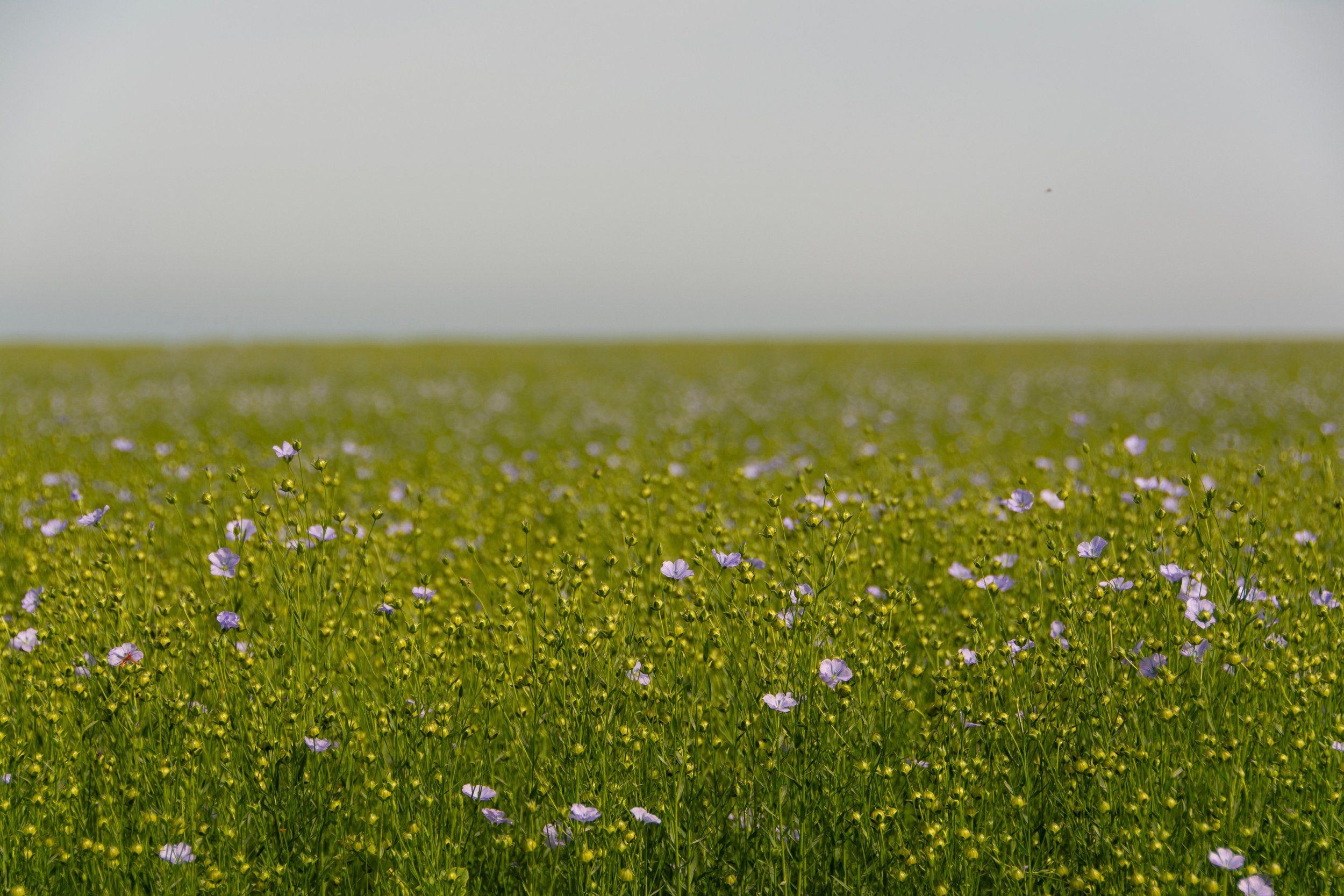
Developing the Sustainable Textile Materials of Tomorrow
As industries face increasing challenges related to decarbonization, reduced dependence on fossil-based resources, and the development of more sustainable products, natural fibers are attracting growing interest across a wide range of sectors. Textiles, apparel, automotive, construction, agriculture, and composite materials industries are actively seeking renewable solutions that combine technical performance, environmental benefits, and local sourcing opportunities.
For several years, CETI has been developing expertise and processes to valorize a wide range of natural fibers, both plant-based and animal-based. This expertise covers the entire transformation chain, from fiber preparation to their integration into yarns, technical textiles, nonwovens, and composite materials.
Current developments include flax, hemp, nettle, miscanthus, palm fibres, and wool, with the objective of creating new high-value applications for these renewable resources.
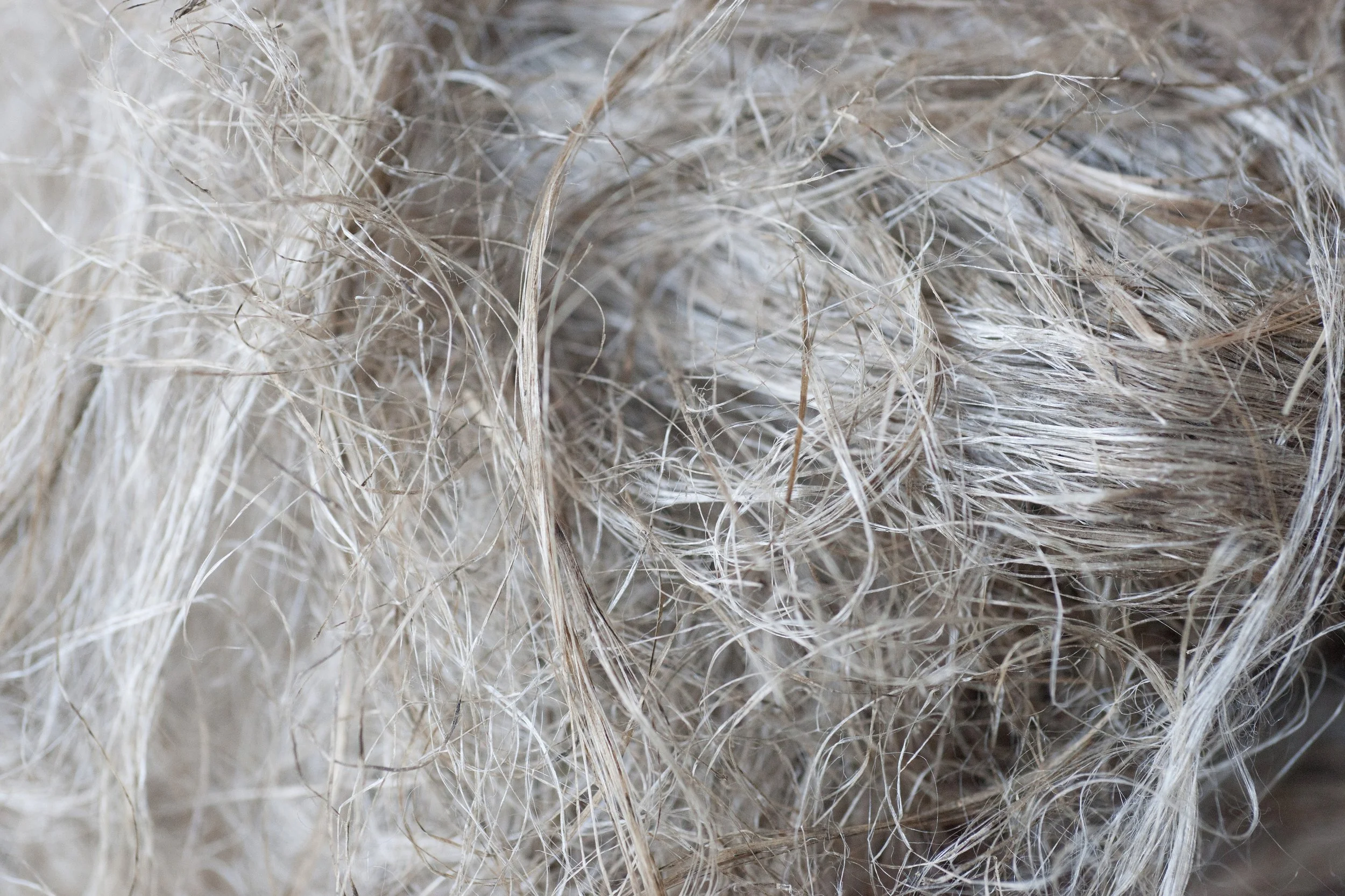
Preparing Natural Fibres for Modern Textile Processes
Natural fibers offer numerous advantages in terms of lightweight performance, mechanical properties, comfort, and environmental footprint. However, their integration into conventional textile processes often requires an adaptation of their physical characteristics.
CETI has developed expertise in cottonization processes that make natural fibers compatible with textile technologies traditionally designed for cotton processing.
This process relies on opening and refining equipment that individualizes the fibrils composing the fiber bundles. The objective is to reduce fiber diameter while preserving as much fiber length as possible in order to maintain mechanical performance.
This technology is currently applied to various plant fibres, including:
Flax
Hemp
Nettle
Miscanthus
Palm fibres
The challenge addressed by CETI's teams is to achieve the best balance between fiber fineness, processability, and mechanical performance retention.
Thanks to this preparation step, natural fibers can be integrated into existing industrial textile processes and gain access to new high-value markets.
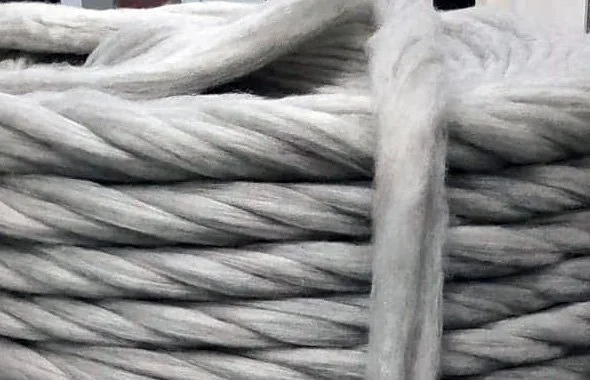
Developing Innovative Yarns Based on Natural Fibers
Once prepared, natural fibers can be incorporated into a variety of yarn structures.
CETI has notably developed open-end yarns combining cottonized flax fibers with cotton, Lyocell, or viscose fibres.
Depending on the targeted application, particularly high incorporation rates can be achieved, significantly increasing the renewable content of the final product.
These developments make it possible to combine the advantages of natural fibers with the performance of modern industrial spinning processes:
Improved environmental footprint
Reduced use of fossil-based raw materials
Enhanced comfort and thermal regulation
Natural aesthetics
Valorization of locally sourced resources
Natural fiber-based yarns have been developed for various applications, ranging from apparel to technical textiles, including automotive applications.
Reinventing Traditional Fabrics Through Natural Fibers
Natural fibers also provide opportunities to rethink traditional fabrics and improve their sustainability profile.
In this context, CETI has worked on a modern reinterpretation of Chambray, a fabric historically made from cotton and flax.
The developed fabric combines:
50% cotton
25% recycled cotton
25% cottonized flax
Following the development of open-end yarns and subsequent weaving operations, a lightweight woven fabric suitable for shirting applications was successfully produced.
This work demonstrates the feasibility of integrating both natural fibers and recycled materials into high-quality textile products without compromising performance or aesthetics.
Designing Technical Nonwovens Based on Natural Fibers
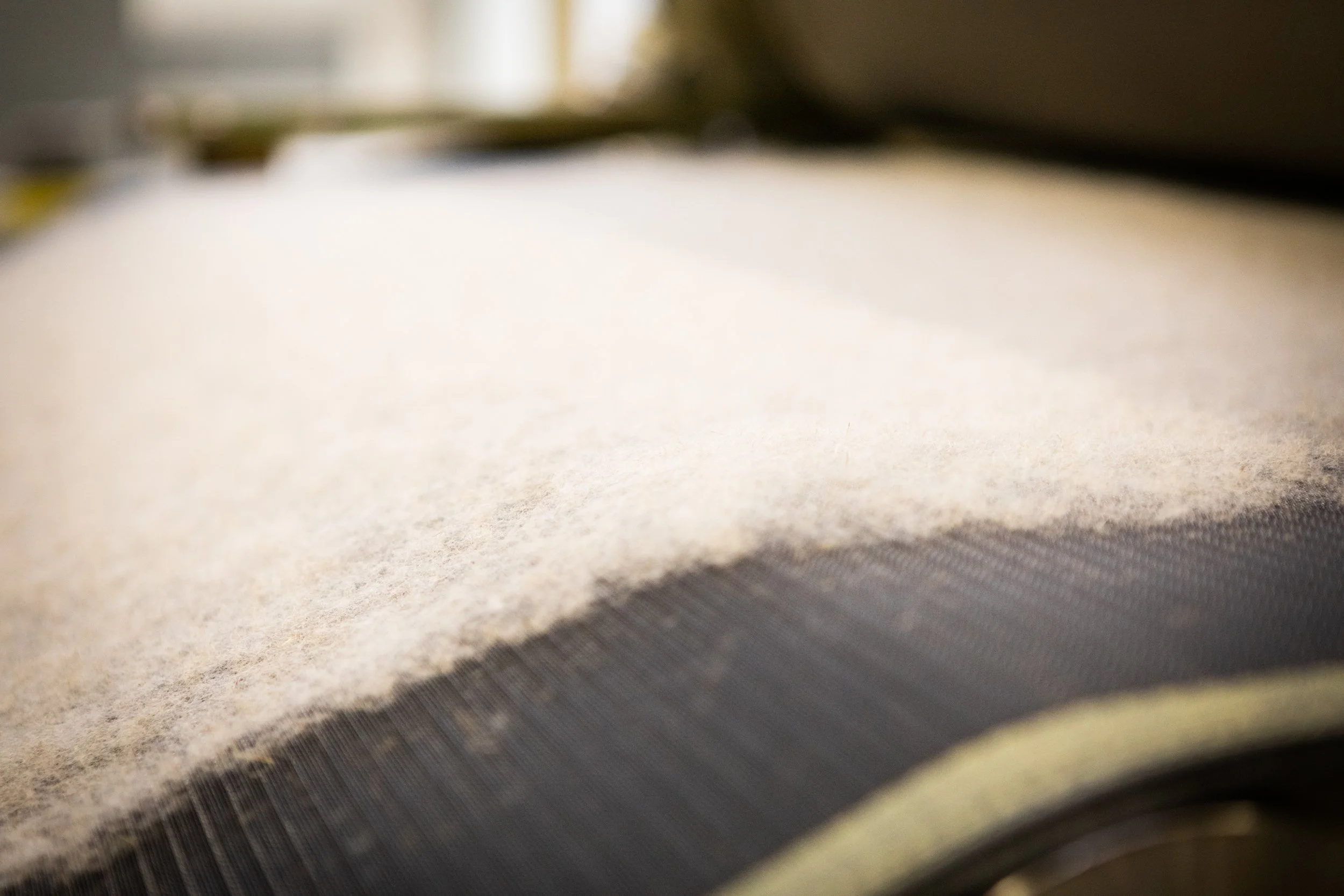
Natural fibers are also particularly attractive for the development of nonwoven structures dedicated to industrial applications.
Thanks to its pilot-scale carding, needle-punching, and consolidation capabilities, CETI develops nonwovens incorporating high proportions of natural fibers.
These structures can be combined with bio-based polymers or used on their own depending on the targeted performance requirements.
Reinforcements for Composite Materials
Natural fiber nonwovens represent an excellent solution for composite reinforcement applications.
Their low density and attractive mechanical properties enable the development of lighter and more sustainable composite solutions for transportation, marine, sports, and construction industries.
Research projects conducted by CETI have notably led to the development of structures combining natural fibers and bio-based polymers for demanding applications, including marine environments.
Thermal and Acoustic Insulation for Construction
Natural fibers also offer significant potential for the development of insulation materials dedicated to the construction sector.
CETI develops nonwoven mats and felts based on plant and animal fibers that provide:
Good thermal insulation performance
Sound absorption properties
Natural moisture regulation
Low carbon footprint
These materials can be used in walls, roofs, partitions, and flooring systems, contributing to the development of bio-based building solutions aligned with the decarbonization objectives of the construction industry.
Agriculture and Landscaping Applications
Natural fiber nonwovens can also be used in agricultural applications.
The solutions developed by CETI include biodegradable mulching materials capable of limiting weed growth while reducing the use of conventional plastic films.
Technical Underlays
Natural fiber felts can be used as technical underlays for flooring systems and other applications requiring cushioning, insulation, vibration damping, or enhanced comfort.
A Comprehensive Platform to Accelerate Innovation in Natural Fibers
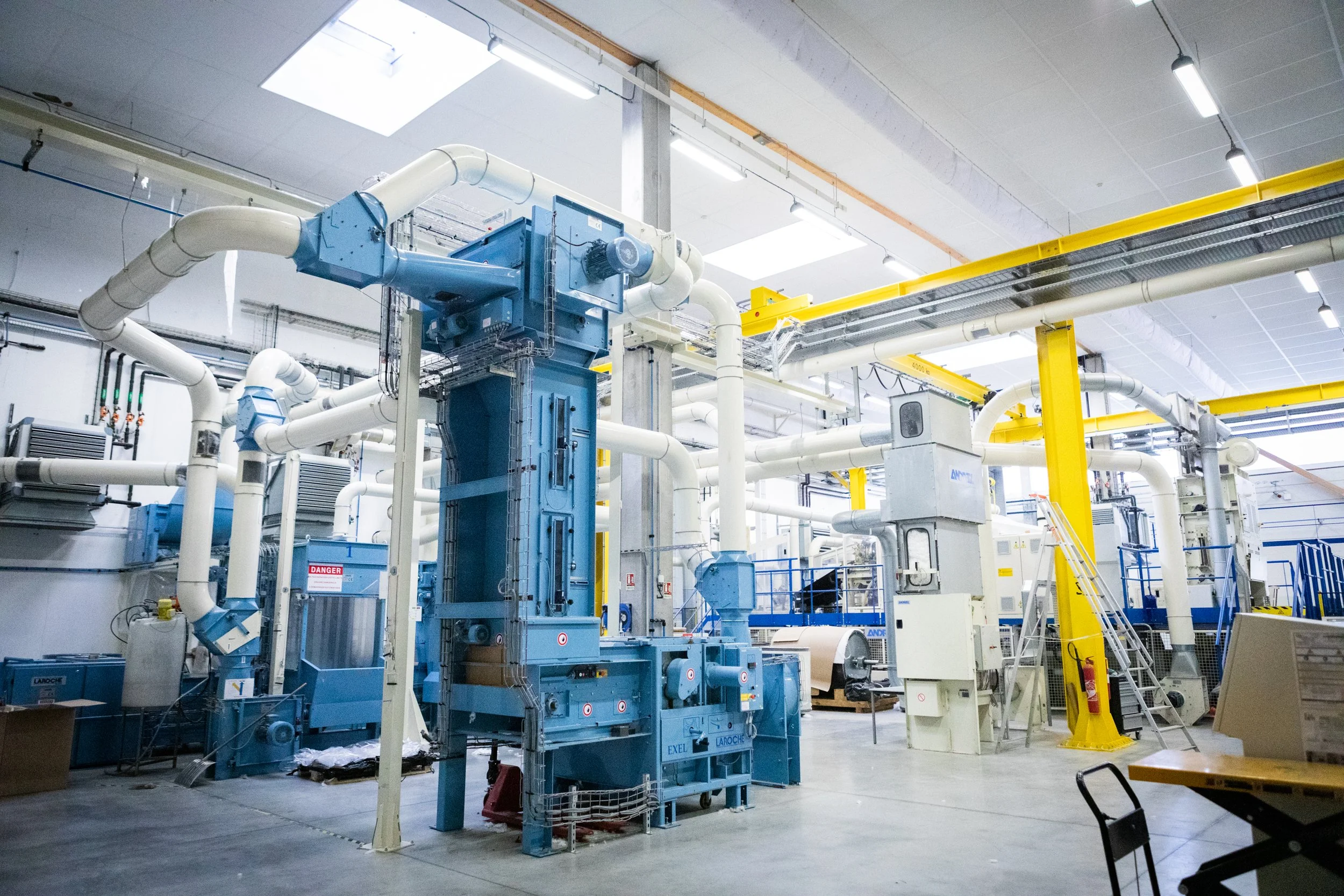
Thanks to its pilot-scale equipment and expertise covering fiber preparation, spinning, nonwovens, weaving, composites, and material characterization, CETI supports manufacturers in the development of innovative solutions based on natural fibers.
These projects contribute not only to the valorization of renewable resources such as flax, hemp, nettle, miscanthus, palm fibres, and wool, but also to the development of new generations of textile and technical materials that meet growing expectations in terms of sustainability, circularity, and performance.
From fiber preparation to pilot-scale demonstrators, CETI provides companies with the expertise and technological capabilities required to transform natural fibers into high-value products and accelerate the emergence of a more sustainable textile industry.
♻️ Learn more on CETI’s expertise in natural fibers, and on CETI’s yarn spinning and drylaid nonwovens platforms
