
Hemp2Comp: Turning Raw Hemp Fibers into Nonwoven Materials for Biocomposite Applications
Developing a local value chain for hemp-based composites
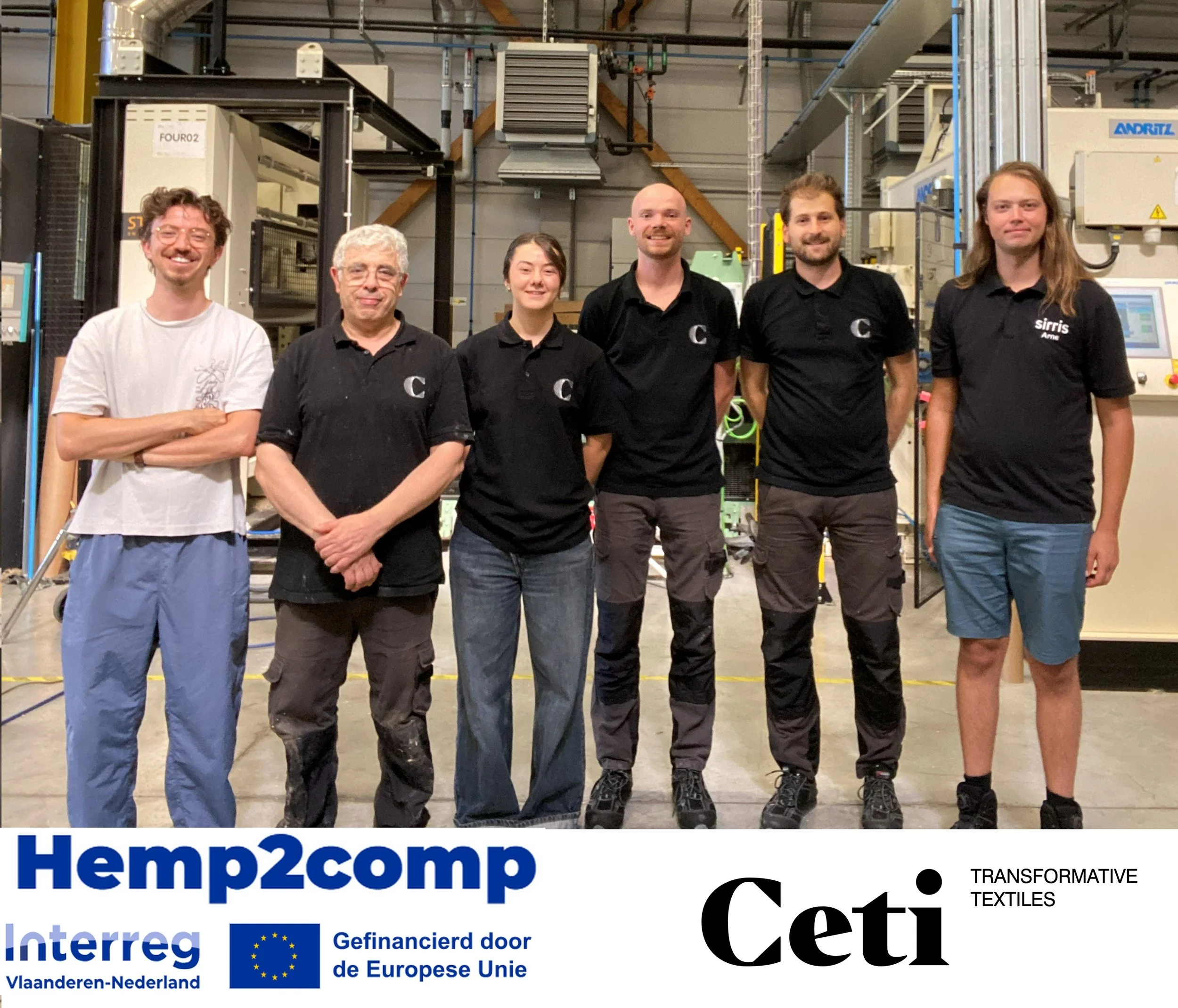
Hemp2Comp – Hemp to Composites is a European Interreg Flanders-Netherlands project aimed at developing a local value chain for hemp fibers and accelerating their use in more sustainable composite materials.
The Hemp2Comp project runs from March 2024 to February 2027 and aims to establish a local hemp fiber value chain in the Flemish-Dutch border region.
The project addresses the complete value chain, from hemp cultivation and fiber preparation to bioresin selection, semi-finished material production, composite processing and end-of-life solutions. Its ambition is to demonstrate the potential of locally grown hemp as an alternative to conventional materials for a range of industrial applications. It also aims to produce a demonstration batch of at least five hemp-based products and assess their potential within a circular economy approach.
As part of this initiative, CETI contributed as a subcontractor, providing its expertise and pilot-scale equipment for the preparation and transformation of raw hemp fibers into drylaid nonwoven materials.
From raw hemp to textile-ready fibers
One of the challenges when using natural fibers in industrial applications is to adapt the raw material to the requirements of downstream transformation processes.
Under services commissioned and supervised by Sirris and Plantics, CETI's teams worked on the preparation and transformation of raw hemp fibers.
The first stages focused on:
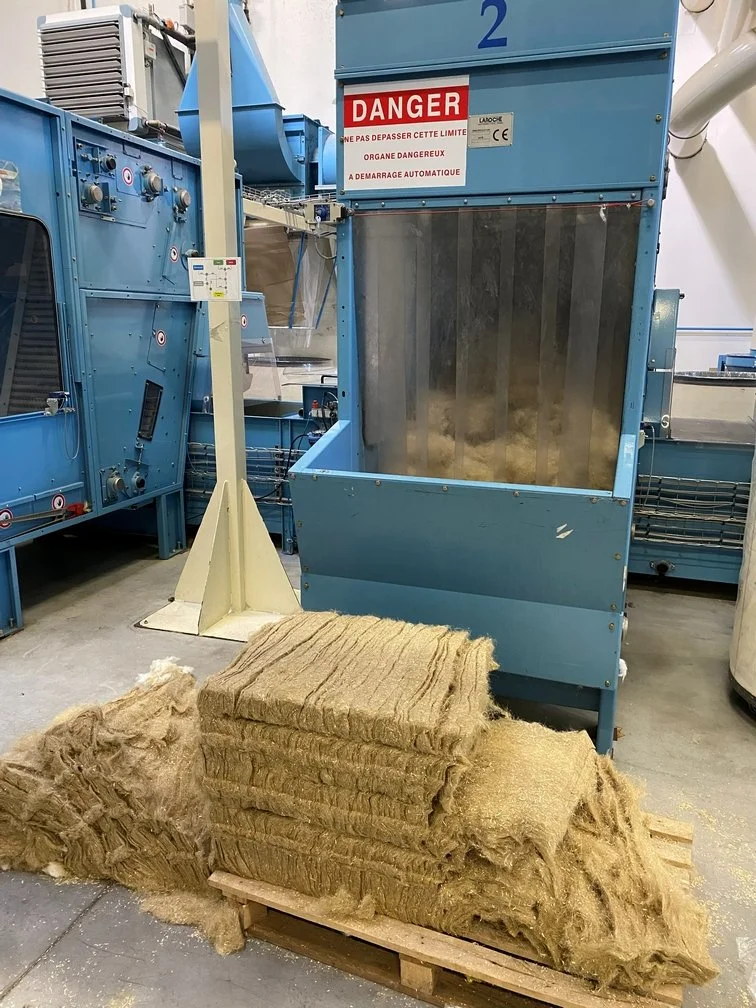
Cutting the raw hemp fibers to obtain lengths compatible with subsequent processing;
Cottonization, to open, individualize and prepare the fibers for textile processing;
Homogenization and preparation of the fibers before nonwoven web formation.
This preparation stage is essential to facilitate the transformation of natural fibers on textile equipment and obtain sufficiently homogeneous semi-finished materials for subsequent development.
Producing hemp nonwovens using drylaid technologies
Following fiber preparation, CETI mobilized its drylaid nonwoven platform to transform the prepared hemp into nonwoven panels.
Two processing routes were investigated:
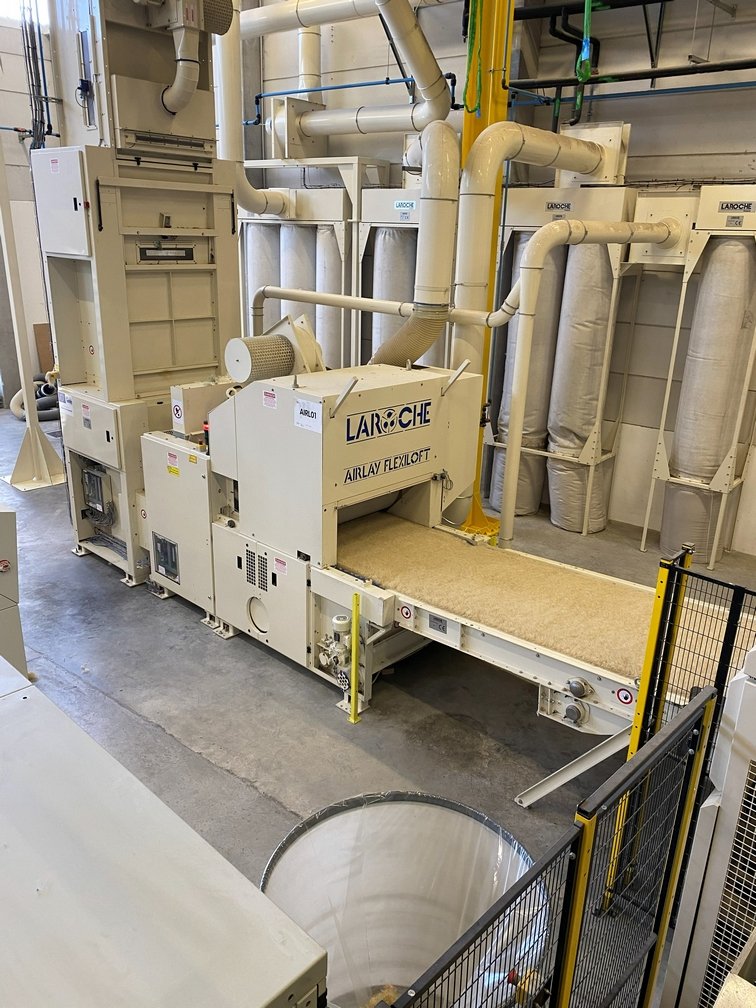
Airlay + needle punching
The prepared hemp fibers were formed into a web using Airlay technology, which enables the processing of a wide variety of fibers and the production of relatively thick and homogeneous structures.
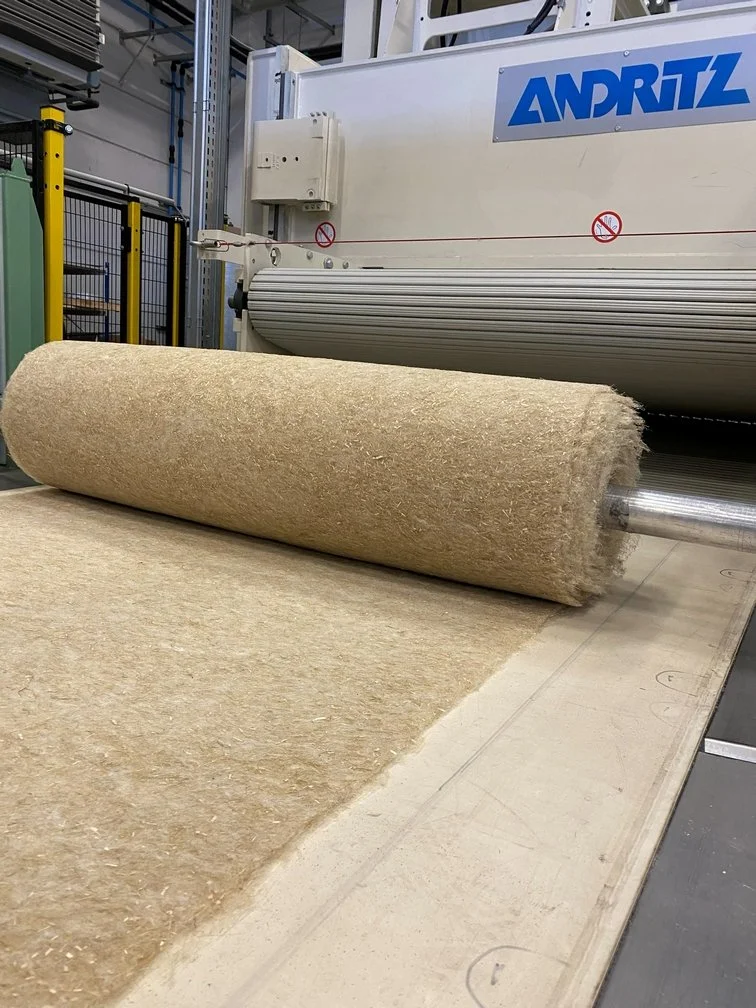
The web was subsequently mechanically consolidated by needle punching to produce a coherent nonwoven structure.
Airlay + thermal consolidation
A second route combined Airlay web formation with oven consolidation, providing an alternative approach to producing consolidated hemp-based panels.
These trials demonstrated how textile processing technologies can contribute to converting a raw natural resource into semi-finished nonwoven materials suitable for further development in biocomposite applications
Natural fibers: bridging biomass and industrial materials
The work performed within Hemp2Comp illustrates a broader technological challenge: natural fibers need to be prepared, transformed and engineered to meet the requirements of industrial processes and final applications.
CETI supports this transition through pilot and pre-industrial capabilities covering fiber preparation, opening and blending, cottonization, spinning, drylaid nonwovens, material characterization and other textile transformation processes.
This combination of material expertise and industrial process capabilities enables companies and research partners to evaluate the technical feasibility of new natural-fiber applications and move from raw resources toward representative semi-finished products and prototypes.
Bio-based materials: a strategic development area for CETI
Supporting the transition toward bio-based textile materials is one of CETI's strategic development priorities.
CETI works across three complementary technological routes:
Textile applications for biopolymers
CETI evaluates and develops the use of bio-based polymers for textile applications, from formulation and processability assessment to fiber formation, nonwoven production, prototyping and industrial validation.
👉 Discover CETI's expertise in Bio-polymers
Converting biomass into new fibers through wet spinning
CETI's Wet Spinning platform opens another pathway for biomass valorization. It enables the development of filaments and fibers from natural polymers and alternative feedstocks, including compounds extracted from agricultural by-products and other biomass sources.
This approach creates opportunities to transform resources containing polymers such as cellulose, keratin or other natural macromolecules into new textile materials.
👉 Discover CETI's Wet Spinning Platform
Valorizing plant and animal natural fibers
From flax and hemp to other plant fibers and wool, CETI develops processing routes to transform natural fibers into yarns, nonwovens, technical textiles and materials for industrial applications.
Fiber preparation, cottonization and adaptation to downstream processes are key steps in unlocking the technical and economic potential of these renewable resources.
👉 Discover CETI's expertise in Natural Fibers
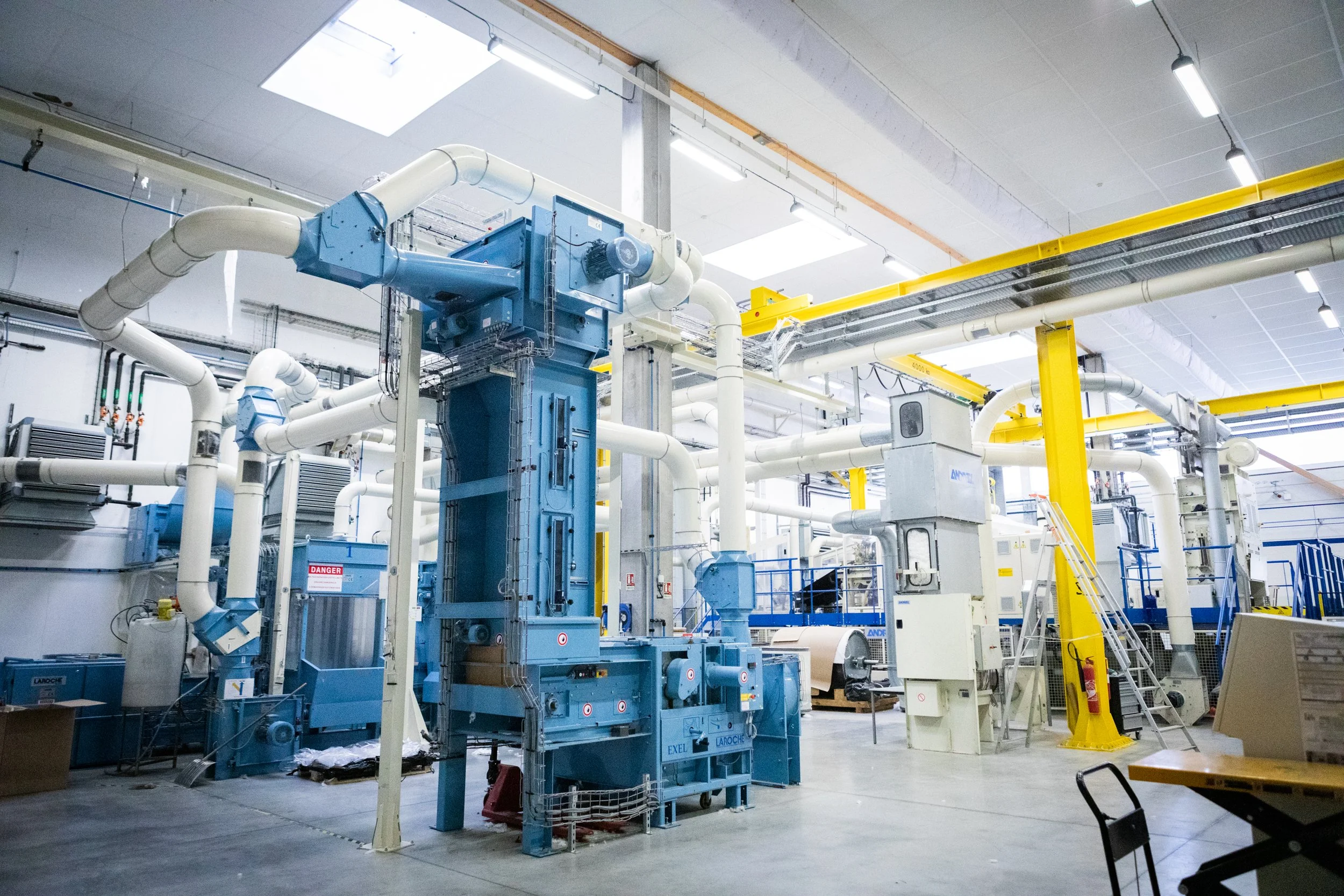
CETI’s Drylaid nonwovens platform
Have a natural fiber or bio-based material to develop?
Whether you are working with hemp, flax, wool, agricultural by-products, biomass or biopolymers, CETI's teams can help you evaluate their textile processability, identify relevant transformation routes and develop representative materials using pilot and pre-industrial equipment.
From raw material preparation to textile transformation, prototyping and process scale-up, our objective is to help turn renewable resources into technically relevant and industrially viable solutions.
🤝 Contact us to discuss your bio-based textile development project.
