
CETI Explores the Potential of Wet Spinning
Transforming natural polymers derived from agricultural and textile by-products into new textile fibres presents exciting opportunities, but also significant technological challenges. Through its wet spinning capabilities, CETI supports the development of new bio-based filaments, helping partners assess polymer spinnability, optimise processing conditions and refine spinning dope formulations.
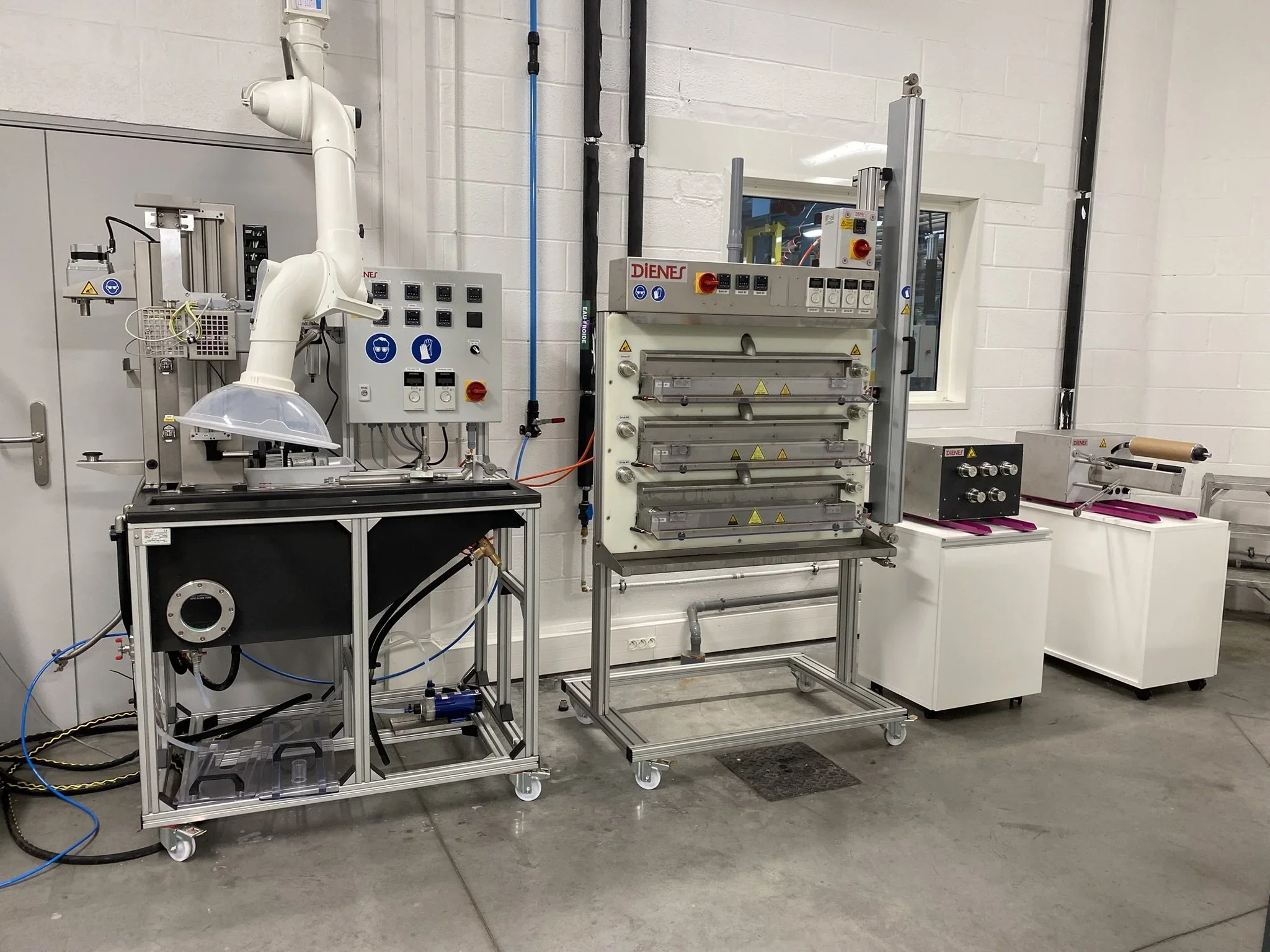
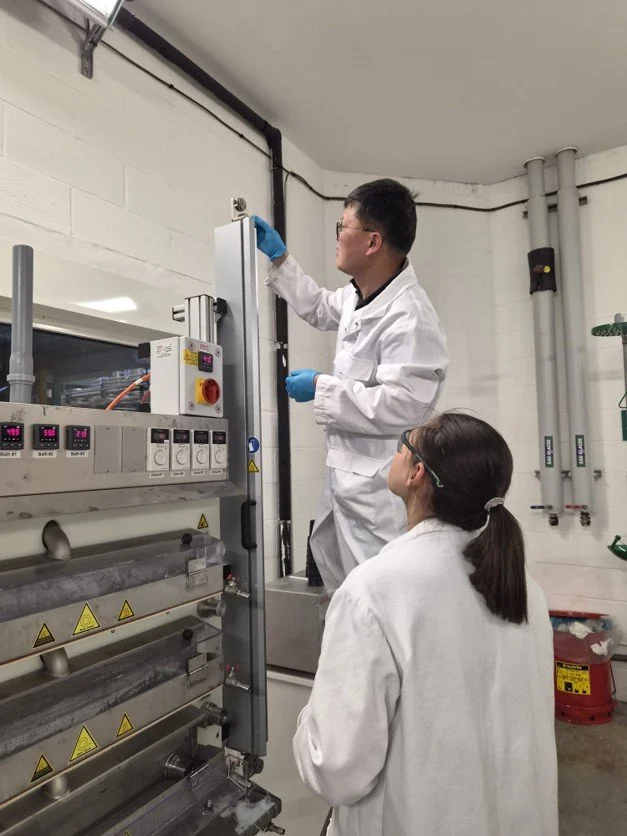
CETI's laboratory-scale wet spinning facilities enable the evaluation of innovative polymer formulations and the optimisation of processing conditions for new textile filament development.
Wet spinning: unlocking new opportunities for natural polymers
As the textile industry seeks alternatives to fossil-based synthetic fibres, growing attention is being paid to natural polymers recovered from agricultural residues, textile waste and other underused biomass resources.
Cellulose and proteins such as keratin offer interesting opportunities for developing new textile materials. However, unlike many conventional thermoplastic polymers, these materials cannot generally be processed through melt spinning without degradation.
Wet spinning provides an alternative route for converting such polymers into continuous filaments.
In this process, a polymer solution, commonly referred to as a spinning dope, is extruded through a spinneret into a coagulation bath, where the polymer solidifies to form filaments. Subsequent processing steps may include washing, drawing and drying to develop the required fibre properties.
While the principle is well established, successfully spinning unconventional natural polymers remains a complex challenge, requiring careful adjustment of both the spinning dope formulation and processing conditions.
From polymer solutions to continuous filaments: CETI's expertise in wet spinning
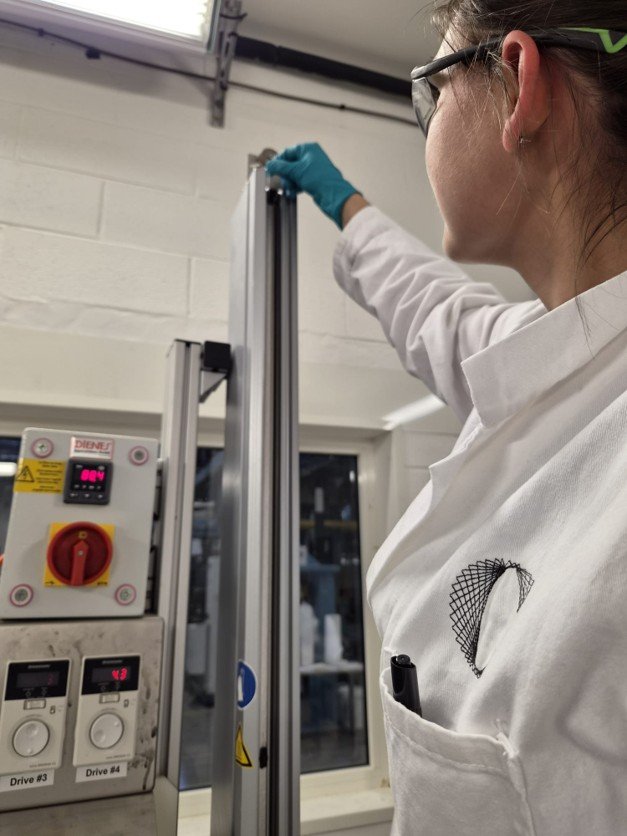
At CETI, laboratory and pilot-scale wet spinning capabilities are used to investigate the feasibility of transforming natural polymer solutions into textile filaments.
The main challenge is not simply to extrude a polymer solution, but to achieve stable and reproducible filament formation while progressively improving fibre quality and performance.
Spinning dope formulation and processing conditions are closely interconnected. Polymer concentration, viscosity, solution homogeneity and stability can strongly influence extrusion behaviour, coagulation and filament formation.
Through experimental spinning trials, CETI's experts assess how different formulations behave under processing conditions and identify the factors limiting their spinnability.
The results provide valuable feedback to project partners responsible for polymer preparation and dope formulation, helping them refine their formulations to better meet the requirements of the spinning process.
In parallel, CETI investigates the influence of key processing parameters, including extrusion conditions, coagulation and filament take-up, to identify suitable operating windows.
This iterative approach combines formulation adjustments and process optimisation, with each experimental campaign contributing to a better understanding of the relationships between polymer characteristics, spinning behaviour and filament properties.
The objective is to progressively identify compatible formulations and processing conditions that enable reliable filament production and support further material development.
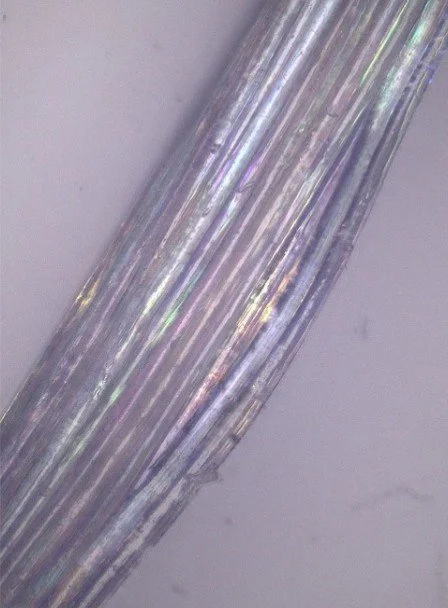
Two collaborative projects exploring cellulose and keratin wet spinning
OZOCELL: exploring wet spinning of cellulose derived from oilseed flax
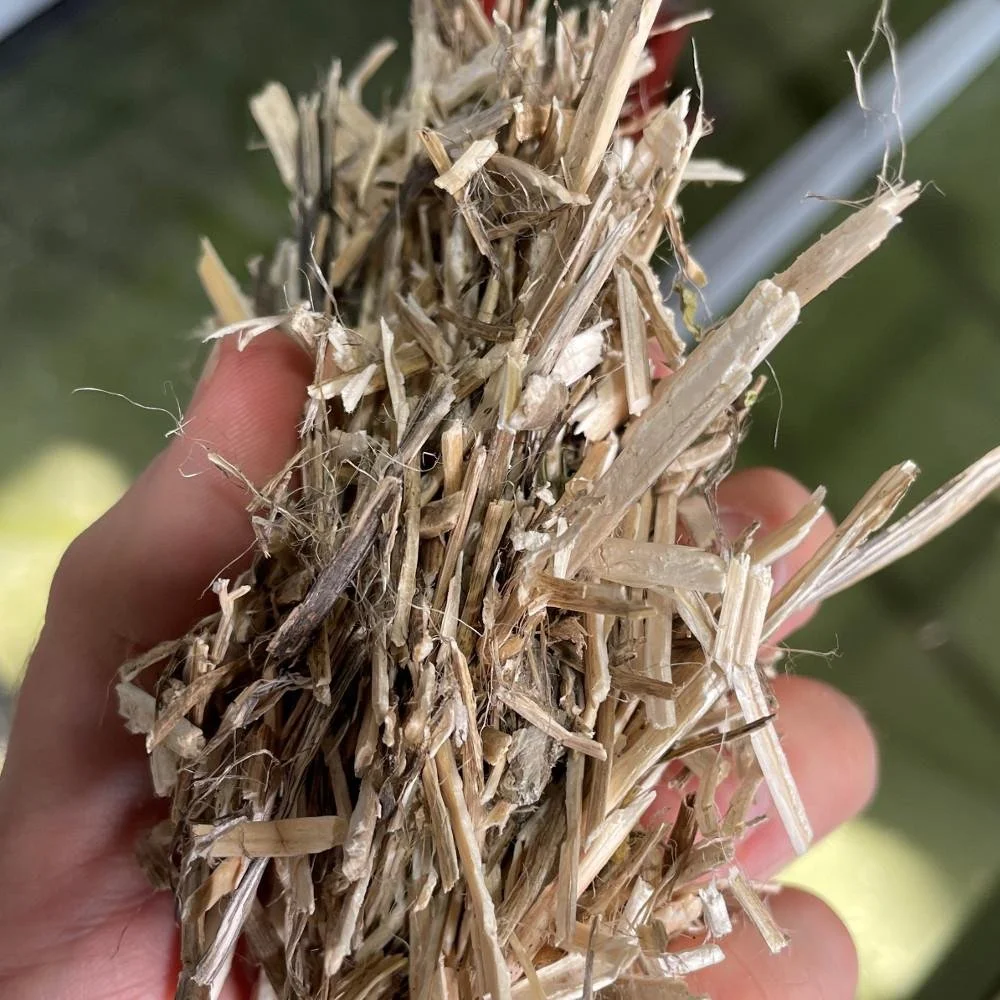
The OZOCELL project investigates the valorisation of cellulose extracted from oilseed flax straw, an agricultural by-product with potential for developing new bio-based textile materials.
The project explores an alternative cellulose processing route involving ozone-based treatment, with the ambition of developing filaments without relying on some of the hazardous chemicals associated with conventional viscose production.
Within this collaborative project, CETI focuses on evaluating the wet-spinning behaviour of the cellulose-based formulations developed by its partners.
Experimental trials aim to assess their suitability for filament formation, identify processing difficulties and investigate the influence of spinning conditions on filament stability and quality.
The observations made during these trials provide technical feedback to guide further adjustments to the spinning dope formulation.
Formulation development and spinning optimisation are still ongoing, with the objective of progressively improving process stability and filament characteristics.
KEWOOL: investigating the spinnability of wool-derived keratin
The KEWOOL project explores the valorisation of keratin recovered from underused wool resources, with the objective of developing new protein-based textile filaments.
Keratin presents particular challenges for wet spinning, notably because the characteristics and stability of the polymer solution can strongly influence filament formation and subsequent fibre properties.
Within the project, CETI contributes its wet-spinning expertise to evaluate the processability of keratin-based formulations and identify the conditions required for filament formation.
Laboratory trials investigate the behaviour of the spinning solutions during extrusion and coagulation, as well as the influence of processing parameters on filament formation and stability.
The results are shared with the partners developing the polymer formulations, providing guidance for further adjustments aimed at improving their suitability for wet spinning.
As with OZOCELL, formulation and process optimisation remain ongoing, with experimental work focused on overcoming spinning difficulties and progressively improving filament quality.
An iterative approach combining experimental flexibility and knowledge sharing
Developing fibres from unconventional natural polymers rarely follows a straightforward path.
A formulation that appears suitable based on its initial characteristics may still present difficulties during extrusion, coagulation or filament handling. Conversely, experimental trials can reveal promising processing behaviours that help guide subsequent developments.
This is where CETI's combination of pilot-scale capabilities and technical expertise brings particular value.
Rather than simply executing a predefined series of trials, CETI's experts analyse experimental observations, investigate processing limitations and adapt operating parameters according to the results obtained.
Each trial, whether successful or not, contributes to a better understanding of the material and helps identify the next steps towards improved spinnability.
Through continuous exchanges with formulation partners, these findings help guide material adjustments and progressively narrow down the most promising formulation and processing combinations.
This collaborative approach allows partners to benefit not only from experimental results, but also from a deeper understanding of how their materials behave during textile processing.
CETI thus acts as a technology co-development partner, helping bridge the gap between innovative polymer formulations and their potential transformation into textile fibres.
Towards new opportunities for bio-based textile materials
Wet spinning offers promising opportunities to develop innovative textile fibres from natural polymers that are not suitable for conventional melt-spinning technologies.
The OZOCELL and KEWOOL projects illustrate the diversity of resources that can be explored, from agricultural cellulose to wool-derived proteins.
Although formulation and processing developments are still underway, these projects contribute to building the knowledge required to assess the technical feasibility of new bio-based fibre solutions.
Beyond demonstrating spinnability, further developments will need to address filament properties, process reproducibility, productivity and the requirements of downstream textile applications.
By combining laboratory and pilot-scale wet spinning with its broader expertise in textile processing and material characterisation, CETI supports partners in progressing from experimental polymer formulations towards technically viable fibre development pathways.
Are you developing innovative polymers or new bio-based materials with potential textile applications?
CETI can help evaluate their suitability for wet spinning, investigate processing challenges and identify opportunities for further fibre development.
Contact our team to explore how CETI's wet-spinning expertise can support your next material innovation project.
