
Ferlam Technologies 2
From Para-Aramid Recycling to Technical Nonwoven Manufacturing
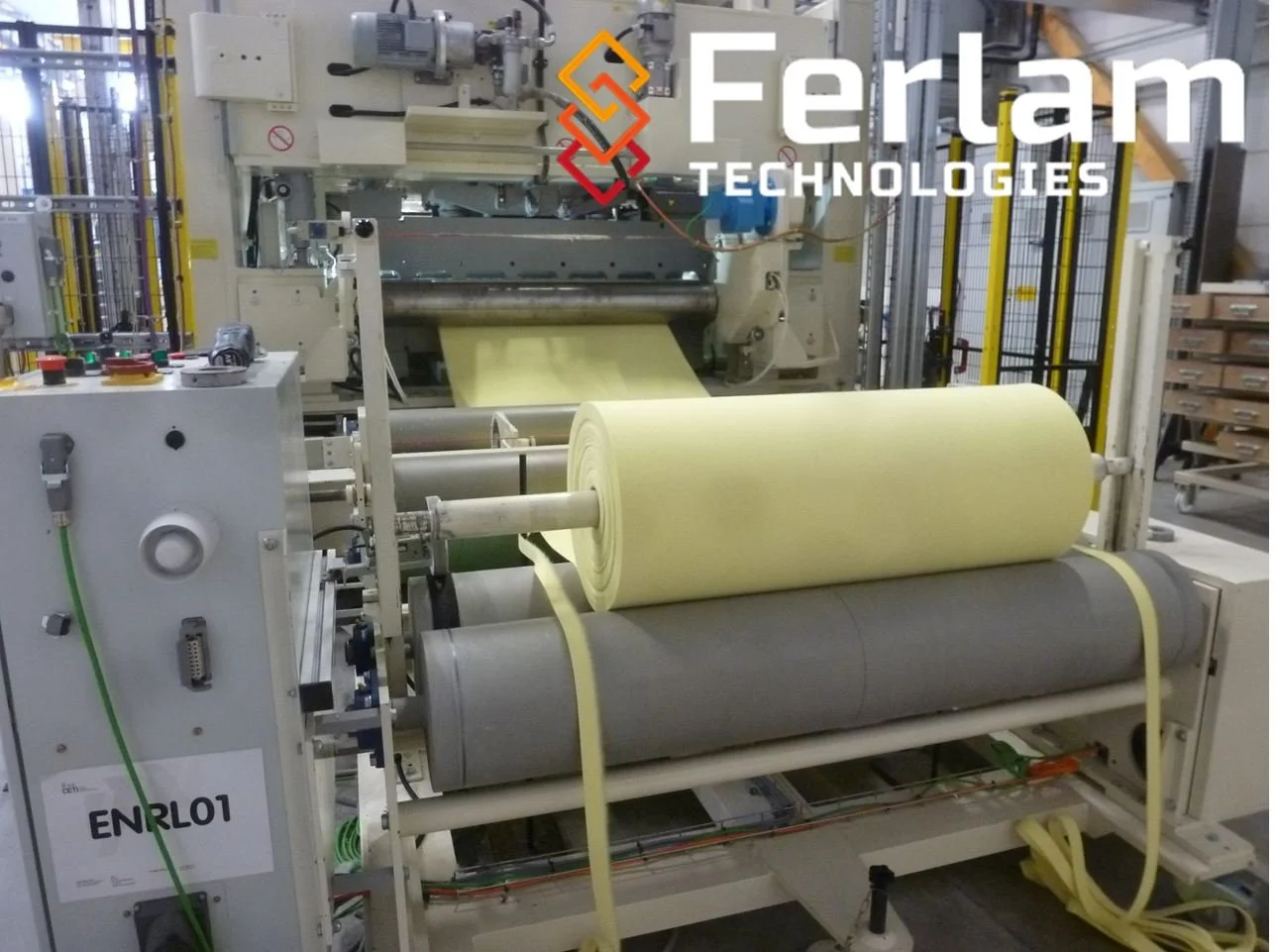
CETI carried out a pilot-scale demonstration for Ferlam Technologies involving the mechanical recycling of para-aramid textiles and their transformation into technical nonwovens. The project successfully validated a complete processing chain, from the preparation of ballistic protection textiles to the manufacturing of needle-punched nonwoven structures, while preserving fiber lengths suitable for further textile processing.
The Challenge: Recycling a Material Designed to Withstand High Mechanical Loads
Para-aramids are high-performance fibers characterized by high tensile strength, high modulus and good thermal resistance.
These properties explain their use in protective equipment, technical reinforcement and a wide range of industrial applications.
However, they also present specific challenges for mechanical recycling.
Cutting para-aramid textiles requires equipment adapted to their high strength and abrasive characteristics. The subsequent tearing process must separate the fibers without excessively reducing their length or generating defects.
For the project conducted for Ferlam Technologies, CETI worked with a feedstock consisting of 100% para-aramid textiles recovered from ballistic protection equipment.
The objective was to demonstrate the feasibility of a new recycling route leading to the production of technical nonwovens.
An Integrated Approach from Feedstock Preparation to Nonwoven Production
1. Adapting Cutting Operations to Para-Aramid Properties
Feedstock preparation was a critical first step.
The trials required modifications to the cutting equipment, including the use of dedicated blades designed for abrasive materials.
Three successive cutting passes were carried out to obtain textile fragments suitable for feeding the tearing line.
This preparation stage enabled progressive and controlled fiber opening.
2. Optimizing Tearing While Preserving Fiber Length
Mechanical tearing was subsequently performed on a pilot-scale line equipped with four cylinders adapted to the material.
Process optimization focused on several parameters:
• Efficiency of textile structure opening;
• Preservation of fiber length;
• Limitation of fiber nep formation;
• Control of electrostatic effects.
One of the main findings was the importance of avoiding excessively aggressive processing conditions.
Although sufficient opening is essential for fiber recovery, excessive mechanical stress can promote defect formation and reduce the suitability of the recovered fibers for further processing.
3. Characterizing Recovered Fibers
Following process optimization, the recovered fibers exhibited the following characteristics:
Parameter Result
Mean fiber length (ML) 34.1 mm
Upper Half Mean Length (UHM) 48.9 mm
Short fiber content (below 9 mm) 4.9%
These results demonstrate the possibility of recovering para-aramid fibers through mechanical processing while maintaining favorable fiber lengths and a low proportion of short fibers.
The resulting fiber quality made it possible to investigate their transformation using adapted conventional textile manufacturing processes.
From Recycled Fibers to Technical Nonwovens
The recovered fibers were used to develop drylaid nonwoven materials.
The process combined three main operations:
Carding → Crosslapping → Needle Punching
Carding opens and organizes the fibers into a web. Crosslapping builds up the structure to achieve the targeted basis weight, while needle punching provides mechanical cohesion.
The trials successfully produced nonwovens with nominal basis weights of 250 and 350 g/m².
Processing required particular attention to environmental conditions, especially temperature and humidity, to limit electrostatic effects.
Following process adjustments, stable operating conditions were achieved.
Initial Mechanical Performance Results
For a nonwoven with a basis weight of approximately 360 g/m², tensile testing provided the following results:
• 390 N in the machine direction (MD);
• 670 N in the cross direction (CD).
These initial results provide mechanical performance indicators for the developed nonwoven structures.
They form a basis for further optimization according to the requirements of targeted applications.
Opportunities in Protective Equipment and Industrial Thermal Insulation
Nonwovens made from recycled para-aramid fibers offer potential for several technical applications, including:
• Personal protective equipment (PPE): Applications where materials must meet specific functional and regulatory requirements.
• Industrial thermal insulation: Applications where thermal resistance and the characteristics of fibrous structures may provide useful performance benefits.
The results demonstrate manufacturing feasibility but do not, by themselves, constitute qualification for these applications.
Additional testing will be required to evaluate thermal performance, durability and, depending on the target market, compliance with applicable standards.
Key Project Results
Parameter Result
Feedstock 100% para-aramid textiles
Origin Ballistic protection equipment
Recycling process Adapted cutting and mechanical tearing
Recovered fiber UHM 48.9 mm
Short fiber content (below 9 mm) 4.9%
Nonwoven manufacturing Carding, crosslapping and needle punching
Nonwoven basis weights developed 250 and 350 g/m²
Tensile forces measured on an approximately 360 g/m² product 390 N MD / 670 N CD
CETI's Contribution: Mastering the Complete Recycling and Transformation Chain
This project illustrates the complementary capabilities of CETI's technological platforms.
The work involved:
• Mechanical Recycling Platform: Feedstock preparation and fiber recovery.
• Recycled Fiber Development and Characterization: Analysis and qualification of recovered materials.
• Drylaid Nonwoven Manufacturing Platform: Development and validation of fibrous structures through drylaid processing.
The ability to carry out these operations on pilot-scale equipment provides an important advantage when assessing technical solutions, identifying processing constraints and preparing subsequent industrial development stages.
The Ferlam Technologies project demonstrates that a particularly resistant material, whose mechanical recycling presents significant challenges, can be transformed into a new raw material suitable for developing technical textile products.
Related Projects and Expertise
• Understanding the Processes, Performance and Economic Challenges of Aramid Recycling
• Explore CETI's Pilot-Scale Experimentation and Industrialization Platforms
• Learn More About Ferlam Technologies
Would you like to develop new applications for your technical fiber waste or validate the production of nonwovens from recycled materials? CETI can support your project from feasibility assessment through to pilot-scale production.
