Papeteries Du Léman
Integrating Recycled Cotton Textile Fibres into Fine Recycled Papers: A Collaborative Approach Between CETI and Papeteries Du Léman
Abstract
The increasing volume of post-industrial and post-consumer textile waste presents significant environmental and economic challenges. While mechanical recycling routes exist, large quantities of textile residues remain underutilized due to limitations in fibre quality and market applications. In this context, the collaboration between the CETI (European Centre for Innovative Textiles) and PDL (Papeteries du Léman) explores an alternative valorisation pathway through the incorporation of recycled cotton textile fibres into fine recycled paper grades. This work investigates the technical feasibility of transforming textile waste into a secondary raw material for the paper industry while supporting circular economy objectives. The study highlights the opportunities offered by textile-paper synergies as well as the technical challenges associated with fibre preparation, dispersion, and papermaking performance. This joint project was notably highlighted at the 65th Dornbirn Global Fibre Congress in September 2026, during a 20-minute presentation to experts from the fibre industry.
Introduction
The textile industry generates substantial amounts of waste throughout the production and consumption cycle. Cotton-based textiles represent a particularly valuable resource due to their high cellulose content, which is chemically similar to the primary constituent of paper fibres issued of wood. Consequently, the development of cross-sector recycling strategies between the textile and paper industries appears as a promising route for increasing material circularity and reducing dependence on virgin resources.
To address this challenge, CETI and PDL initiated a collaborative project focused on the integration of recycled cotton textile fibres into fine recycled papers. The partnership combines CETI's expertise in textile innovation, fibre processing, and recycling technologies with PDL's know-how in papermaking and paper engineering. The objective is to evaluate whether textile waste streams can be efficiently incorporated into paper formulations while maintaining the quality requirements expected for fine paper applications.
Materials and Methods
The project investigated the use of cotton fibres recovered from textile waste streams. Prior to their introduction into the papermaking process, the textile materials were mechanically prepared and transformed into fibrous feedstock suitable for blending with conventional recycled paper fibres. The shredded fibres could be reused for textile applications such as yarn making for garments, nonwovens for isolation, although for recycled paper. Dust fibres collected thanks to vacuum system on the mechanical shredding line are too short for textile applications, however they could as well integrate the paper-making process.
Different formulations were examined to determine the compatibility of textile fibres with recycled paper pulps. Particular awareness was given to fibre dispersion, sheet formation, and the impact of textile fibre content on the physical characteristics of the resulting papers. The experimental approach aimed to identify an optimal balance between textile waste valorisation and paper performance compared to virgin products.
Challenges in Textile-to-Paper Recycling
Although cotton fibres possess favourable cellulose characteristics, their integration into paper manufacturing is not straightforward. Several challenges were encountered during the project.
The first challenge concerns the preparation of textile waste. Textile fibres are typically longer, more entangled, and more heterogeneous than conventional paper fibres. Achieving adequate fibre individualisation and dispersion is therefore essential to ensure homogeneous paper formation.
A second challenge relates to process compatibility. Textile-derived fibres behave differently during pulp preparation and sheet formation, potentially affecting drainage, retention, and machine runnability. The adaptation of process parameters is consequently required to guarantee stable production conditions.
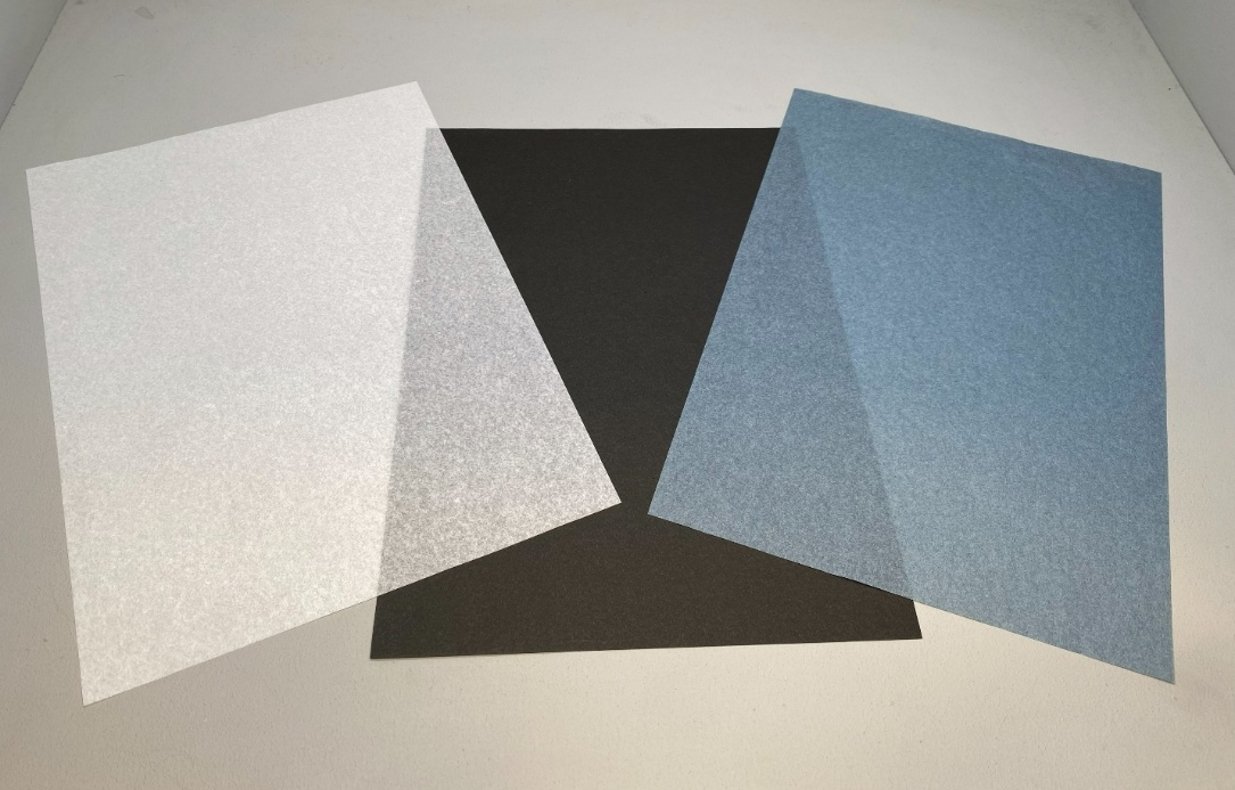
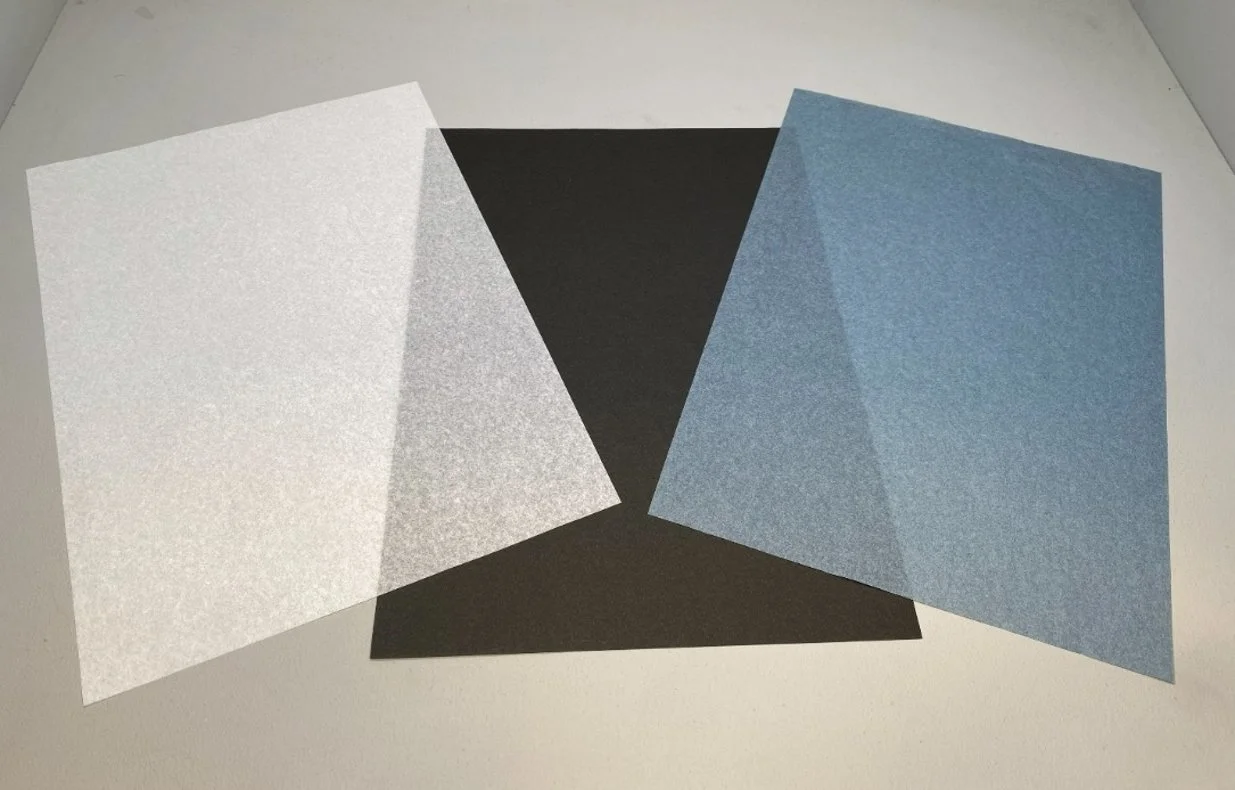
Maintaining the functional and aesthetic properties of fine papers remains a key objective. The incorporation of recycled textile fibres must not significantly compromise paper strength, surface quality, printability, or visual appearance. Finding the appropriate fibre proportion is therefore a critical aspect of the development work. The right balance where achieved until 30% of recycled fibres content for thin papers weight between 18 to 30 gsm.
Economic considerations are also a key factor in the industrial adoption of this solution. The competitiveness of recycled textile raw materials, the value creation associated with the new papers, and the identification of high value-added markets are essential conditions for the large-scale roll-out of this approach.
Finally, environmental considerations remain central. It must be ensured that the papers produced remain recyclable and biodegradable. Securing supplies of textile waste, compliance with emerging regulations such as Extended Producer Responsibility (EPR/REP) or the Packaging and Packaging Waste Regulation (PPWR), and the monitoring of potential contaminants (microplastics, PFAS, heavy metals or substances resulting from textile treatments) are priority areas of research.
Results and Discussion
The collaboration demonstrates that recycled cotton textile fibres can represent a viable supplementary raw material for fine recycled paper production. The cellulose-rich nature of cotton provides an opportunity to extend the lifecycle of textile materials beyond their conventional applications while creating value in another industrial sector.
The results obtained highlight the importance of fibre preparation and formulation optimisation. When adequately processed, recycled textile fibres can be successfully blended with recycled paper pulps and contribute to the production of paper sheets exhibiting suitable characteristics for targeted applications.
Beyond the technical aspects, this work illustrates the relevance of industrial symbiosis between the textile and paper sectors. By connecting two traditionally separate value chains, the project contributes to the development of innovative circular economy solutions capable of reducing waste generation and improving resource efficiency.
Conclusion
The partnership between CETI and PDL demonstrates the potential of integrating recycled cotton textile fibres into fine recycled papers as an alternative route for textile waste valorisation. While several technical challenges remain, particularly regarding fibre preparation and process optimisation, the preliminary results confirm the feasibility of creating paper products containing textile-derived cellulose fibres.
This research highlights the importance of cross-sector collaboration for advancing sustainable materials management and fostering circular economy practices. By transforming textile waste into a valuable resource for papermaking, the project opens new perspectives for the development of innovative, low-impact materials and contributes to reducing the environmental footprint of both industries.