OZOCELL
OZOCELL
Valorising Oilseed Flax Straw into Low-Impact Cellulosic Fibres
The OZOCELL project aims to transform oilseed flax straw — an underutilised agricultural co-product — into low-environmental-impact cellulosic textile fibres through an innovative green chemistry process.
Supported by France 2030 – ADEME and labelled by Techtera, the project contributes to the emergence of a French value chain dedicated to sustainable textile fibres derived from biomass.
A greener alternative for the textile industry
The innovative ozone-based process developed within OZOCELL aims to significantly reduce:
Chemical inputs
Water consumption
Environmental impact associated with conventional cellulosic fibre production
The process could therefore represent a major environmental improvement compared with traditional viscose routes.
By creating value from agricultural co-products, OZOCELL also contributes to:
Additional revenue opportunities for farmers
Reduced dependence on imported synthetic materials
Development of local and resilient textile value chains
-
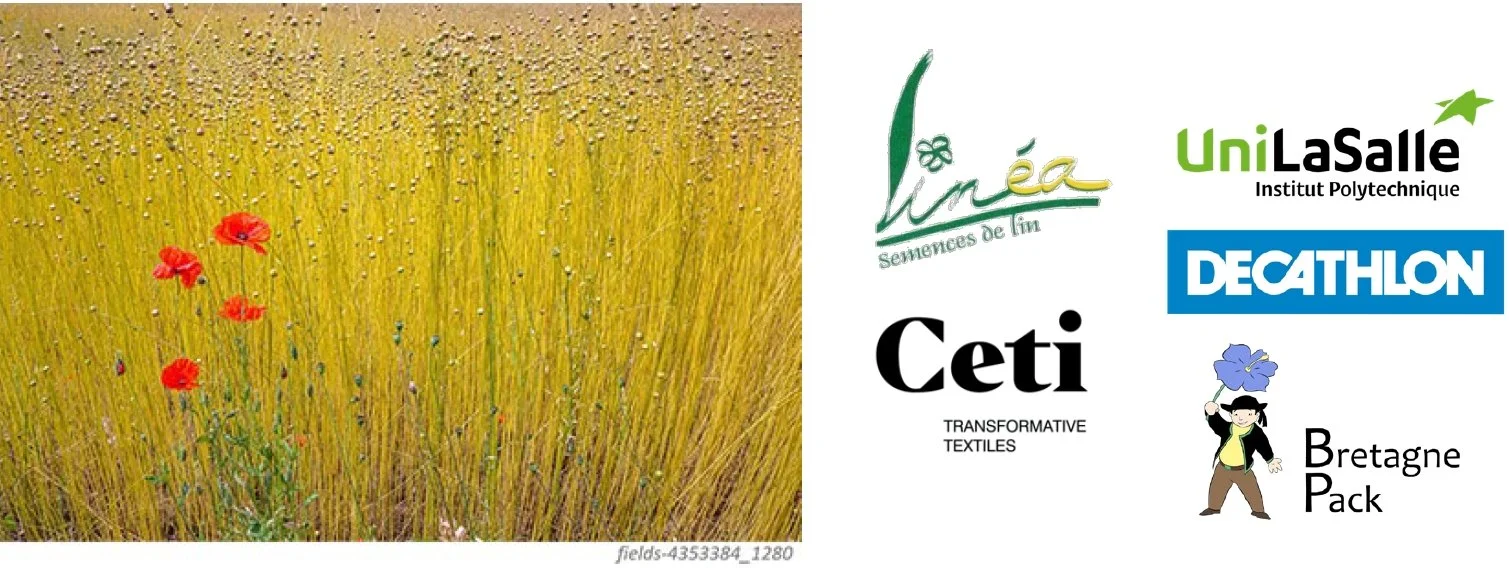
Oilseed flax is primarily cultivated for its seeds, while the straw generated during cultivation remains largely underexploited. Rich in cellulose, lignin and hemicellulose, these co-products represent a significant biomass resource that can be valorised into advanced textile materials.
The OZOCELL project aims to:
Extract cellulose from oilseed flax straw
Develop a low-impact transformation route based on ozone oxidation
Produce man-made cellulosic filaments and fibres
Create a more sustainable alternative to conventional viscose or Lyocell processes
Support circularity and bio-based textile development
The project also targets applications in:
Sports textiles
Technical textiles
Food-contact and transport application
CETI mobilises its industrial pilot platforms to transform extracted cellulose into textile filaments and fibres compatible with industrial applications.
The project is fully aligned with CETI’s strategic mission to support:
Bio-based textile innovation
Circular textile development
Industrialisation of sustainable materials
-
Project leader:
Linéa Semences de lin
Partners:
CETI Transformative Textiles
Decathlon
UniLaSalle
Bretagne Pack
CETI’s role in the project:
Within the consortium, CETI contributes its expertise in:
Biomass valorisation
Dissolution and wet spinning processes
Fibre and filament development
Pilot-scale textile processing
Industrial transfer and scale-up
-
👉 Learn more about CETI’s developments in man-made fibres: Man-made Fibers
👉 Discover CETI’s wet spinning platform
👉 Discover ADEME’s documentation